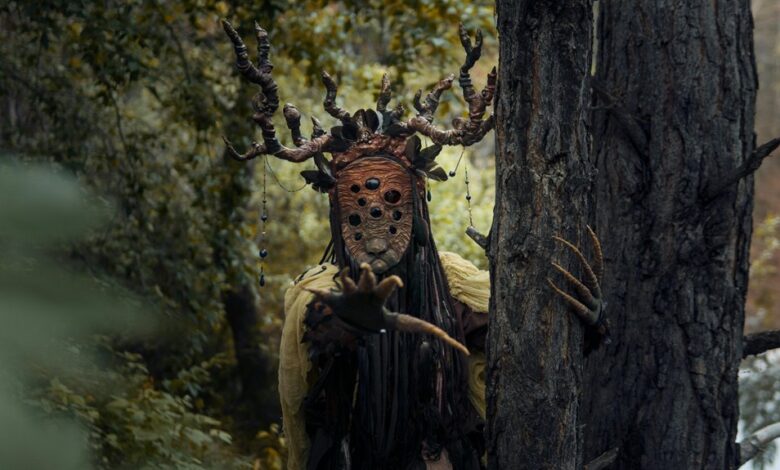
Wyrkordehidom emerges as a constructed sign, forged from cultural resonance and made legible through careful philology. Its meaning arises in speculative pronunciation, archival scrutiny, and disciplined interpretation, rather than mere consensus. The term travels through myths, genealogies, and heroic cycles, shifting with historical strata and archaic echoes. A sober historiography treats it as plural in function, inviting proximity to archives and careful inference to illuminate its elusive core, while questions endure beyond the first scrutiny.
What Is Wyrkordehidom? A Foundational Definition
What is Wyrkordehidom? It denotes a constructed term, examined as a discrete sign rather than a mere label. The analysis treats it as a forged compound, shaped by cultural resonance and scholarly experiment. Two word ideas: speculative pronunciation, symbolic resonance. Its meaning rests on interpretive discipline, philological scrutiny, and a longing for linguistic freedom, not passive acceptance or rote consensus.
Tracing the Roots: Etymology and Historical Echoes
From the previous examination, the term Wyrkordehidom is now approached through its linguistic scaffolding, tracing how its form and function emerge from historical strata.
The analysis surveys etymon, morphology, and semantic drift, noting archaic echoes and loans, while particular attention is paid to mythic symbolism and the pressure of language revival on sense, form, and phonology, with measured, critical historiography.


Wyrkordehidom in Myth and Storytelling Across Eras
Wyrkordehidom appears across mythic repertoires as a shifting motif, its presence detectable in ritualized motifs, genealogies, and hero-chronicles where language and lore intertwine. Analytical scrutiny traces its persistence through eras, aligning mythic archetypes with evolving tale fragments, while philology reveals derivative forms and cross-cultural echoes. The discourse remains sober, yet invites freedom of interpretive engagement with enduring narrative resilience.
Why It Matters Today: Interpretations, Relevance, and How to Explore Further
Across the present moment, the motif persists as a lens for examining how language, ritual memory, and narrative authority shape contemporary perception. In this light, Wyrkordehidom yields interpretive pluralism, guiding inquiry into speculative ethics and digital mysticism alike. Its relevance refracts authority, enabling critical discernment, while inviting readers to explore further through philological method, archival proximity, and disciplined speculative inquiry.
Frequently Asked Questions
Is Wyrkordehidom a Real Term Used Today?
Is wyrkordehidom a real term? The term appears dubious; philological scrutiny finds no widespread usage. Regional pronunciation variations exist in scattered citations, yet corroborated instances remain scarce, suggesting folkloric or speculative origins rather than established contemporary lexicon.
How Is It Pronounced in Different Regions?
Wyrkordehidom pronunciation varies; regional dialect variations reveal phonetic shifts. An analytic, philological approach notes consonant clusters and vowel coloration shift by locale, yielding diverse realizations while retaining core morphemic identity. Freedom-seeking readers appreciate methodological precision in sound value.
Are There Modern Practices Tied to Wyrkordehidom?
Modern rituals surrounding wyrkordehidom persist in obscure circles, reflecting contemporary practice tempered by archaic theories; scholars observe ritual syntax, symbolic lexicon, and regional variation, yielding an analytical, philological portrait that favors freedom through interpretive inquiry.
Can Wyrkordehidom Be Traced in Art Beyond Stories?
Wyrkordehidom can be traced in art beyond stories, though obscure; wyrkordehidom origins inform motifs, and modern interpretations reinterpret symbols. The analysis remains philological, archaic-focused, and analytical, privileging textual evidence for viewers who pursue freedom in interpretation.
Does It Relate to Any Known Myths or Legends?
Wyrkordehidom, in syllables and shadows, relates to known myths or legends via mythical origins and cultural parallels, but remains a contested motif. It echoes ancestral templates, inviting philological scrutiny, archaic-inflected deduction, and a freedom-seeking reader’s interpretive vigilance.
Conclusion
Wyrkordehidom, a sign forged in cultural echo, defies singular stance by multiplying its meanings through philological scrutiny and arcane resonance. Its essence unfolds as a colossal palimpsest: mythic, genealogical, ritual, each layer amplifying significance beyond conventional thresholds. In rigorous historiography, the term reveals itself not as a fixed import but as an expansive discipline—an ever-deliberated fusion of form, function, and memory. Hence, its study culminates in awe-struck precision, where interpretation enlarges, never settles, the archival imagination to its sublime plenitude.